
Concerns
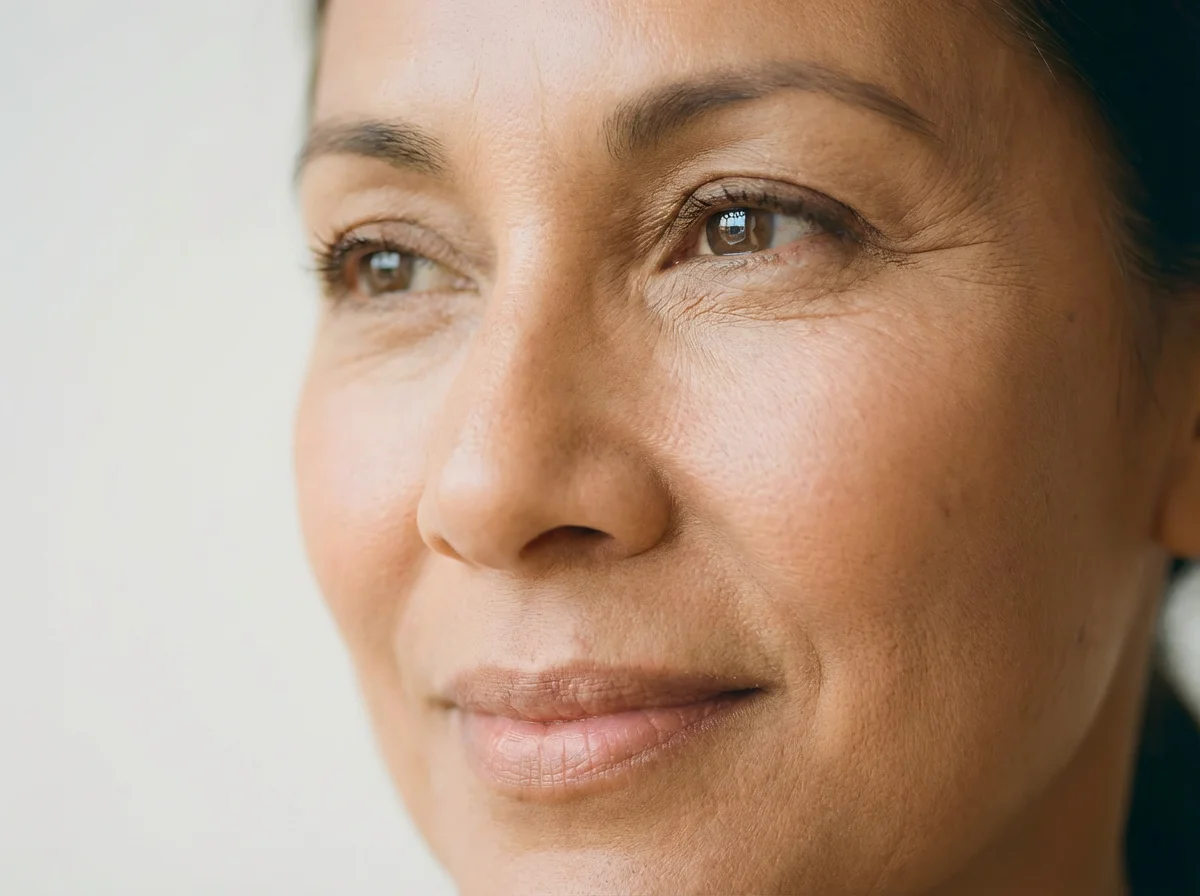
Wrinkles & Fine Lines
Every line has a different origin.
APR 16 2026
What's happening beneath the skin?
What's happening beneath the skin?
There are two distinct types of wrinkles, and they form through different mechanisms.
Dynamic wrinkles form through repeated muscle movement. Every time a facial muscle contracts (squinting, frowning, smiling), it creases the overlying skin. When skin is young and elastic, it springs back. Over time, as collagen and elastin decline, these repeated creases become etched into the skin permanently, even at rest.
Static wrinkles are present regardless of expression. They form through the gradual breakdown of the skin’s structural proteins. Collagen fibres become thinner and less organised. Elastin loses its recoil. The skin thins and loses the ability to hold its surface smooth.
Both types are accelerated by the same environmental factors, particularly ultraviolet (UV) radiation, which fragments collagen through oxidative stress, and smoking, which reduces blood flow and collagen synthesis.
Causes
Causes
Intrinsic ageing and the natural decline in collagen and elastin production over time is the primary driver of static wrinkles.
Repeated facial muscle movement drives dynamic wrinkles. The strength of the muscles involved and how expressive a person is both influence where and when these appear.
Cumulative UV exposure is one of the most significant accelerators. It damages collagen fibres directly and triggers an inflammatory response that breaks them down further over time.
Smoking reduces oxygen delivery to the skin and inhibits collagen production. Genetics determines skin thickness, elasticity, and the rate at which these changes occur. Dehydration and glycation — where sugar molecules bind to collagen fibres and degrade them — contribute over time.
Daily & Ongoing Care
Daily & Ongoing Care
The most impactful daily habits are sun protection and consistent use of active ingredients that support collagen. These work best when started early and maintained long term.
At home:
- SPF 50 or higher daily. UV radiation is the most significant preventable driver of premature wrinkle formation.
- Retinoids are the most evidence-backed topical active for stimulating collagen production, accelerating cell turnover, and visibly improving fine lines with consistent use.
- Vitamin C provides antioxidant protection against UV-induced collagen degradation and supports new collagen synthesis.
- Peptides signal the skin to produce collagen and elastin and layer well alongside other actives.
- Keep the skin well hydrated. Dehydrated skin shows fine lines more prominently.
Professional treatments:
- Neuromodulators (botulinum toxin) temporarily relax the facial muscles responsible for dynamic wrinkles, smoothing expression lines on the forehead, between the brows, and around the eyes.
- Dermal Fillers address deeper static lines and folds by restoring volume where structural support has been lost.
- Fraxel, HALO, and other fractional laser treatments stimulate collagen remodelling to improve static wrinkles and skin texture over a series of sessions.
- Ultherapy and Thermage tighten the skin through deep energy delivery, addressing laxity that contributes to static lines.
- EmFace combines radiofrequency with facial muscle stimulation, addressing both skin quality and underlying muscle tone.
Related
Related Resources
Depending on the type and severity of acne, clinicians may recommend one or a combination of the following treatments:

Not sure what’s right for you?
Schedule a complimentary consultation with our experts to discuss your needs
ARTICLES
Related Articles

Botox and Fillers: The Best Combination Since Peanut Butter and Jelly
Why neuromodulators and dermal fillers still dominate aesthetic medicine, and what patients starting today should know about the category.

Ultrasound vs. RF: Which One Is Right For Me?
Two non-surgical skin tightening categories, often advertised together, built on completely different mechanisms. How to tell which one addresses your concern.

Everyone Wants a Natural Outcome… So Why Isn’t Everyone Getting One?
The demand for natural results has never been higher. The rate of overdone outcomes has not dropped. What is happening, and what to look for in a provider who can actually deliver.