
Concerns
Melasma
Persistent, but with a clear path forward.
What’s happening beneath the skin?
What’s happening beneath the skin?
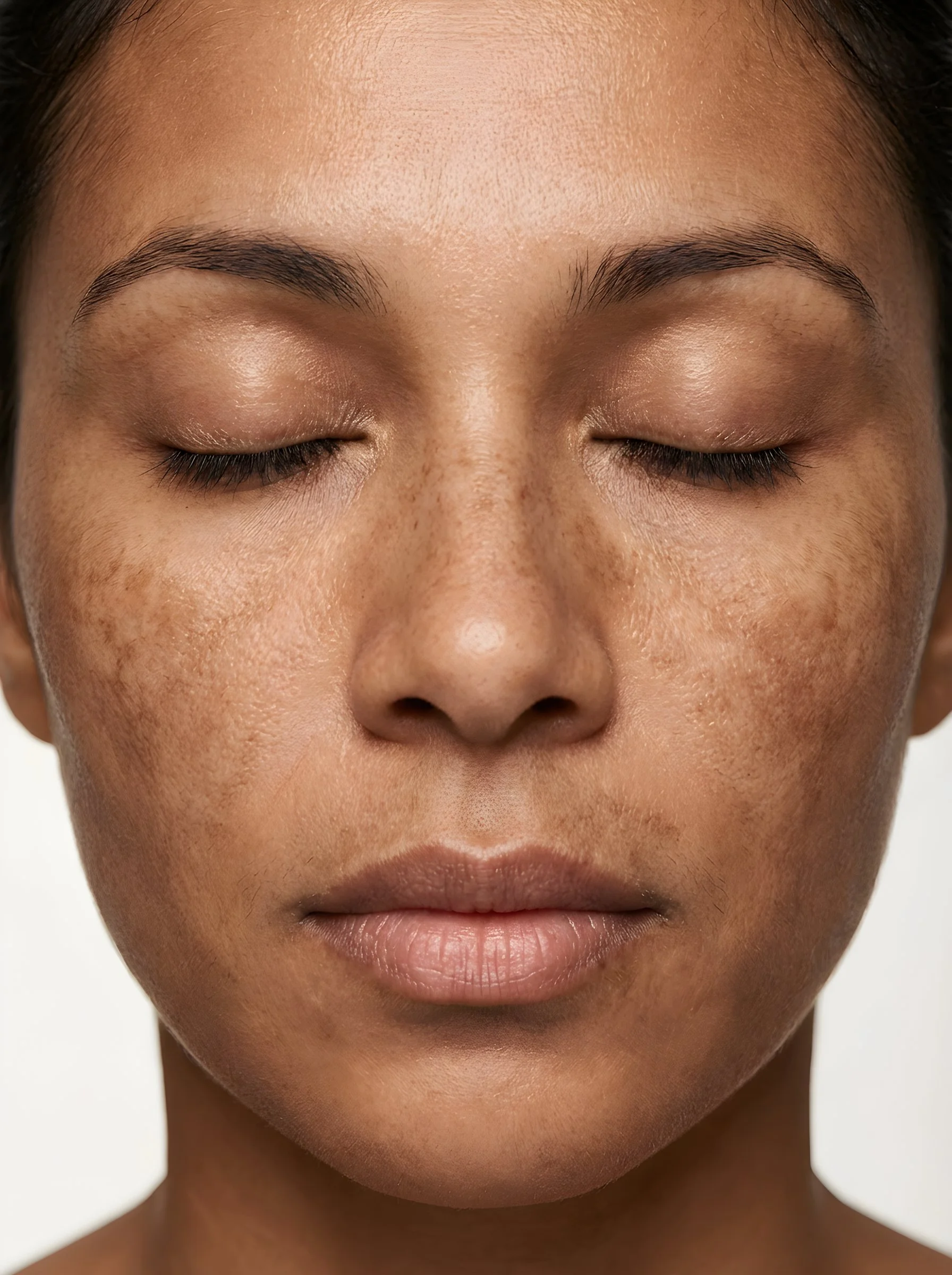
Melasma is a chronic pigmentation condition characterised by symmetrical dark patches on sun-exposed areas of the face. It is one of the more challenging pigmentation concerns to treat because it tends to recur, and managing it well requires as much ongoing maintenance as it does active treatment.
Melasma occurs when melanocytes, the cells responsible for producing pigment, become overactive in specific areas of the skin. Rather than producing melanin evenly, they deposit excess pigment in patches, most commonly across the cheeks, upper lip, forehead, and chin.
The overactivity is driven by two primary triggers working together: ultraviolet (UV) radiation and hormonal influence. UV radiation stimulates melanocytes directly, while oestrogen and progesterone sensitise them to that stimulation. This is why melasma is so common during pregnancy and in women using hormonal contraceptives.
Melasma sits at different depths depending on the individual. Epidermal melasma, which sits closer to the surface, tends to respond better to treatment. Dermal melasma, which is deeper, is significantly more resistant. Many patients have a mixed picture of both.
Causes
Causes
- UV radiation is the primary driver and the most important factor to control. Even brief, unprotected sun exposure can trigger or worsen melasma in susceptible individuals.
- Hormonal influences are closely linked. Pregnancy, combined oral contraceptives, and hormone replacement therapy all increase the risk. The condition is more common in women and in people with darker skin tones, who have more reactive melanocytes.
- Genetic predisposition plays a meaningful role. Melasma tends to run in families and is significantly more prevalent in certain ethnicities, particularly those from Latin America, Southeast Asia, and the Middle East.
Daily & Ongoing Care
Daily & Ongoing Care
Sun protection is not optional with melasma. It is the foundation of every treatment plan, and without it, results from any professional treatment will be short-lived.
At home:
- SPF 50 or higher, every day, regardless of weather or time spent outdoors. Reapply every two hours when in direct sun.
- A broad-spectrum, physical sunscreen containing zinc oxide or titanium dioxide provides the most reliable protection for melasma-prone skin.
- Vitamin C in the morning supports antioxidant defence and helps suppress melanin production.
- Niacinamide reduces the transfer of melanin to surface skin cells and improves overall tone.
- Retinoids support cell turnover and gradually fade surface pigmentation over time.
- Avoid heat where possible. Heat, not just UV radiation, can trigger melanocyte activity.
Professional treatments:
- Topical prescription agents such as hydroquinone, azelaic acid, and tretinoin are typically the first line of treatment before any procedural approach is considered.
- PICO Genesis and StarWalker use ultra-short picosecond laser pulses to fragment melanin deposits with reduced heat, lowering the risk of post-treatment pigmentation changes. Picosecond laser at 1064nm has a well-established evidence base for melasma and is among the better-tolerated laser options, particularly for reactive skin types.
- Sylfirm X uses radiofrequency microneedling with a mode specifically designed to target abnormal vasculature and pigmentation, and is considered well-suited to melasma in reactive or darker skin tones.
- Laser Toning uses low-energy laser passes to gradually reduce pigmentation with a conservative risk profile. It is commonly used for maintenance between more intensive sessions.
All laser-based treatments carry a risk of post-inflammatory hyperpigmentation, particularly in darker skin tones. Strict sun protection before, during, and after any treatment course is non-negotiable. Inform your provider of any hormonal medications, as these may need to be addressed alongside treatment for lasting results.
Related
Related Resources
Depending on the type and severity of acne, clinicians may recommend one or a combination of the following treatments:

Not sure what’s right for you?
Schedule a complimentary consultation with our experts to discuss your needs
ARTICLES
Related Articles

Skin Quality Is Everything. Here’s What That Actually Means.
Your skin has a surface quality — texture, tone, radiance — that most aesthetic treatments don’t actually address. It’s a specific thing. And there are specific treatments for it.

What Your Aesthetic Expert Sees That You Don't
A trained clinician isn't looking at the concern you came in with. They're looking at the whole picture. Understanding that gap is where better outcomes start.