
Concerns
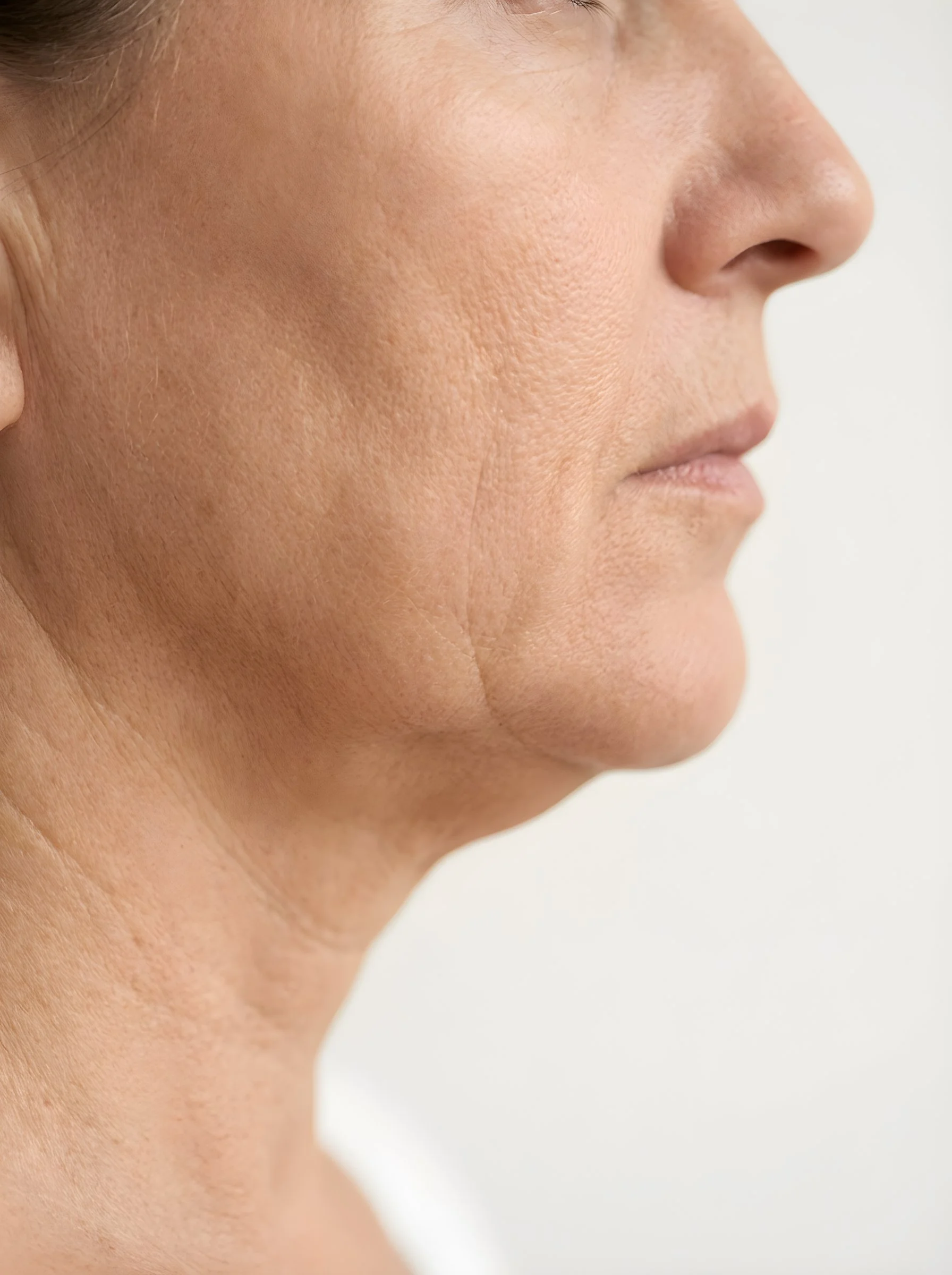
Skin Laxity & Sagging
Gravity is gradual. So is the solution.
What's happening beneath the skin
What's happening beneath the skin
Skin laxity is the gradual loss of firmness and definition that comes with age. It develops slowly, which is part of why it often goes unaddressed until it becomes pronounced. Managing it early expands the available options and improves how well they work.
The skin's firmness depends on a scaffolding of collagen and elastin fibres in the dermis, supported by subcutaneous fat beneath and bone structure below that. All three of these layers change with age.
Collagen production slows from the mid-twenties onward. The fibres that remain become thinner and less organised. Elastin, which gives skin its ability to spring back, degrades similarly. As these structural proteins decline, the skin loses the ability to hold its position against gravity.
At the same time, the subcutaneous fat compartments in the face shrink and shift downward. Bone resorption, particularly around the eye sockets, cheeks, and jaw, reduces the underlying scaffold the soft tissue rests on. Together these changes produce the characteristic hollowing, sagging, and loss of facial definition associated with age.
Causes
Causes
Intrinsic ageing and the natural decline in collagen synthesis over time is the primary driver.
Cumulative ultraviolet (UV) radiation accelerates elastin degradation through a process called solar elastosis, where UV-damaged elastin fibres become disorganised and lose their recoil. This is one of the reasons significant sun exposure accelerates visible ageing well beyond what age alone would produce.
Rapid or significant weight loss removes the fat support beneath the skin faster than the skin can adapt, which is particularly relevant with the increasing use of GLP-1 medications.
Hormonal changes, particularly the decline in oestrogen during perimenopause and menopause, accelerate collagen loss significantly. Genetic predisposition influences both the rate of laxity development and where it appears first.
Daily & Ongoing Care
Daily & Ongoing Care
Prevention is meaningfully more effective than correction. The structural changes driving laxity develop over years, and consistent early care slows that process significantly.
At home:
- SPF 50 or higher daily. UV radiation is the most significant preventable driver of premature elastin and collagen breakdown.
- Retinoids are the most evidence-backed topical ingredient for stimulating collagen production and slowing dermal thinning. Consistent use over months produces measurable results.
- Vitamin C supports collagen synthesis and provides antioxidant protection against UV-induced degradation.
- Peptides signal the skin to increase collagen and elastin production, and are well tolerated alongside other actives.
- Stay well hydrated and maintain a stable weight where possible. Repeated cycles of weight gain and loss stress the skin's structural support.
Professional treatments:
- Ultherapy uses focused ultrasound to deliver energy to the deep structural layers of the skin, stimulating collagen remodelling at the same depth targeted in surgical facelifts.
- Thermage uses radiofrequency energy to heat collagen in the deep dermis, causing immediate tightening and stimulating longer-term collagen rebuilding.
- Morpheus8 combines radiofrequency microneedling to remodel collagen in the deeper dermis and subdermal tissue.
- EmFace uses synchronised radiofrequency and muscle stimulation to improve both skin quality and the underlying facial muscle tone simultaneously.
- Dermal Fillers and Biostimulators restore lost volume and stimulate new collagen, addressing the structural support deficit that contributes to sagging.
Related
Related Resources
Depending on the type and severity of acne, clinicians may recommend one or a combination of the following treatments:

Not sure what’s right for you?
Schedule a complimentary consultation with our experts to discuss your needs
ARTICLES
Related Articles

Ultrasound vs. RF: Which One Is Right For Me?
Two non-surgical skin tightening categories, often advertised together, built on completely different mechanisms. How to tell which one addresses your concern.

What Are Biostimulators? (and Why They Are a Big Deal)
Biostimulators don't replace lost volume. They prompt the body to build its own collagen. The result takes longer to appear and, in most patients, looks better when it does.